From Carbon To Silicon, and beyond | 45 years of marine propulsion engineering
Intelligent Design · From Carbon To Silicon, and beyond

Engineering Confidence Before a Blade Is Made.

Every Mencast propeller is the survivor of tens of thousands of explored designs - not the first that worked.

Higher propulsive efficiency, lower fuel burn, quieter operation and a shorter design cycle - because the propeller is optimised as a whole propulsion system, not fitted to fixed constraints after the fact.

Our Method

How We Design.

We don't guess at a propeller and refine it. Every design runs through an iterative spiral - four loops that combine empirical experience, hydrodynamic analysis, CFD simulation, operational understanding and AI-enabled tools, tightening the design on every pass until it earns validated engineering confidence.

Under the hood: resistance empirical and ML surrogate models, physics matcher, lifting line, lifting surface, vortex lattice and CFD solvers; scenario planner, engineering rules engine and single- and multi-objective optimisation and evaluation engines.

1Resistance 2Matching 3Optimisation 4Validation Validated design model
The design spiral - four iterative loops converging on a validated design model.

The four loops, in order

01

Resistance Prediction

Resistance prediction establishes the foundation of the entire design process, matching resistance and displacement before anything else is decided.

  • ✓Reconcile multiple independent data sources
  • ✓AI surrogate models for rapid prediction
  • ✓A realistic resistance baseline for the whole design
02

System Matching

The propeller performs as part of a complete propulsion system, so it is matched to the rest of it rather than designed in isolation.

  • ✓Hull resistance and wake field
  • ✓Engine operating profile and gearbox selection
  • ✓Propeller loading, cavitation and duty cycle

The propeller is designed to the system, not in isolation.

03

Hydrodynamic Optimisation

Vessel-specific, high-performance propeller solutions are developed and refined through CFD and AI-enabled optimisation workflows.

  • ✓Blade loading distribution and wake adaptation
  • ✓Cavitation behaviour and pressure pulse reduction
  • ✓Efficiency improvement and off-design robustness
04

Validation & Verification

Final designs are selected on validated engineering confidence across the full picture, not on a single metric.

  • ✓Propulsion matching and CFD verification
  • ✓Cavitation assessment and operational robustness
  • ✓Structural feasibility and manufacturability
Resistance• Matching• Optimisation• Validation Iterated until the design earns confidence.
The Difference AI Makes

From Tens of Designs to Tens of Thousands.

Introducing AI into the design spiral did not replace our engineers - it multiplied the design space they can explore.

Tens→Tens of thousands
candidate designs explored per project
Weeks→Days
typical design-cycle turnaround
  • ✓AI-assisted designs perform comparably to specialist designs.
  • ✓A vastly larger design space is explored for every project.
  • ✓Capacity is freed for early-stage design consultancy.
  • ✓Propulsion assessment, optimisation studies, repowering and conversion analysis.

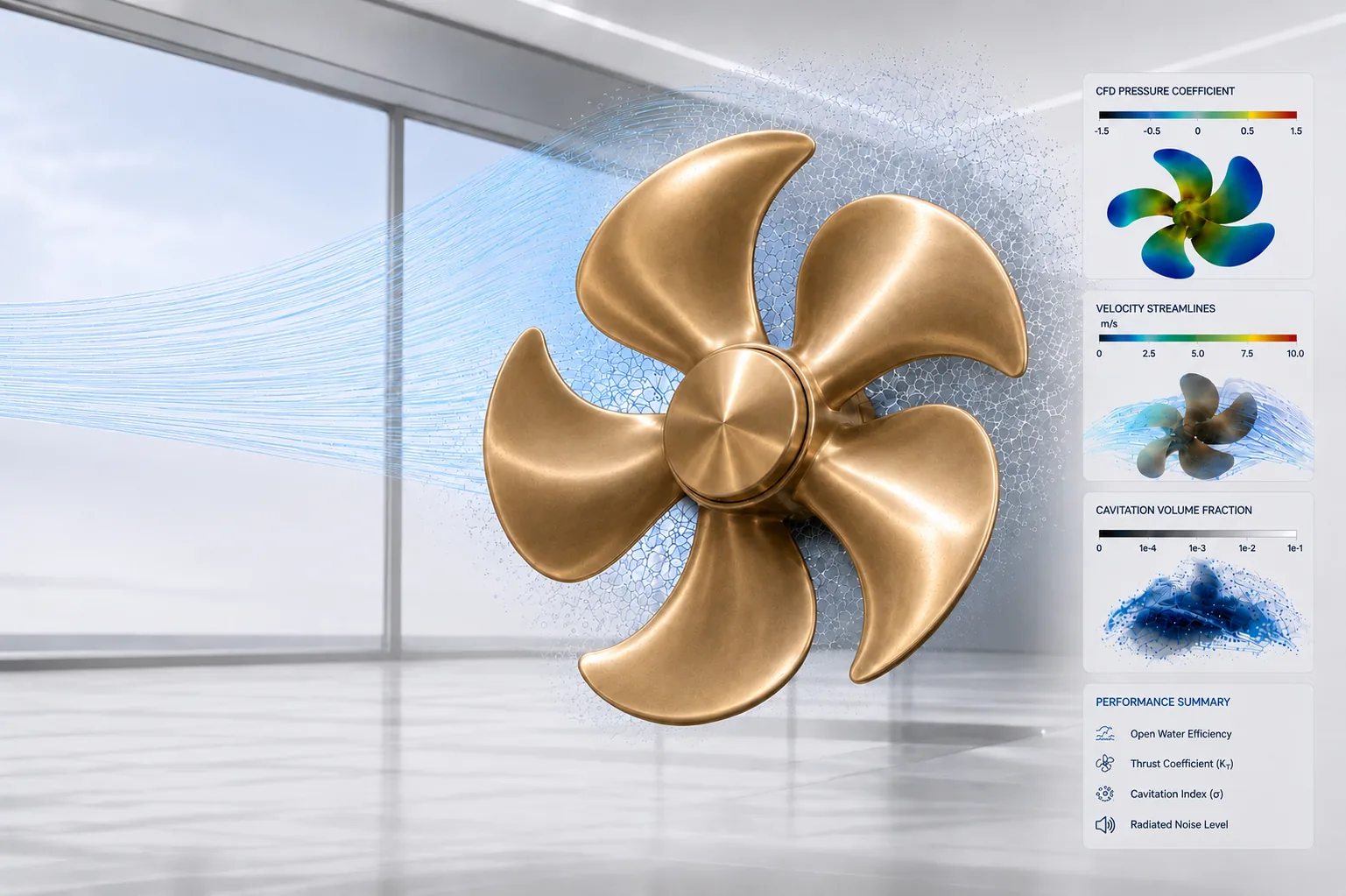
Generative AI, grounded in physics. The surrogate and ML models in our toolset let us generate and evaluate novel blade geometries at scale - generative design driven by hydrodynamic physics and decades of operational data, not styling.

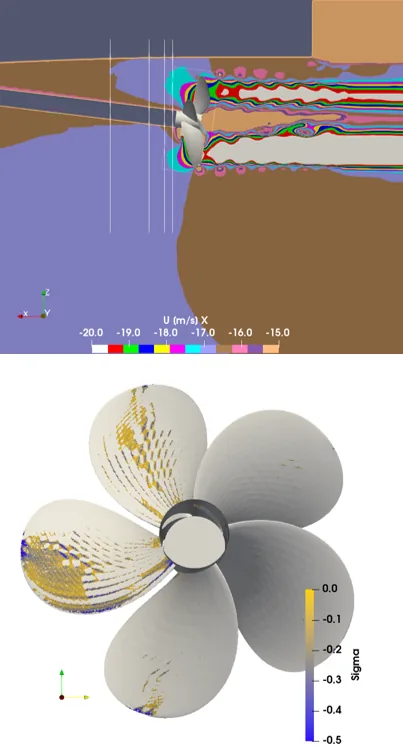
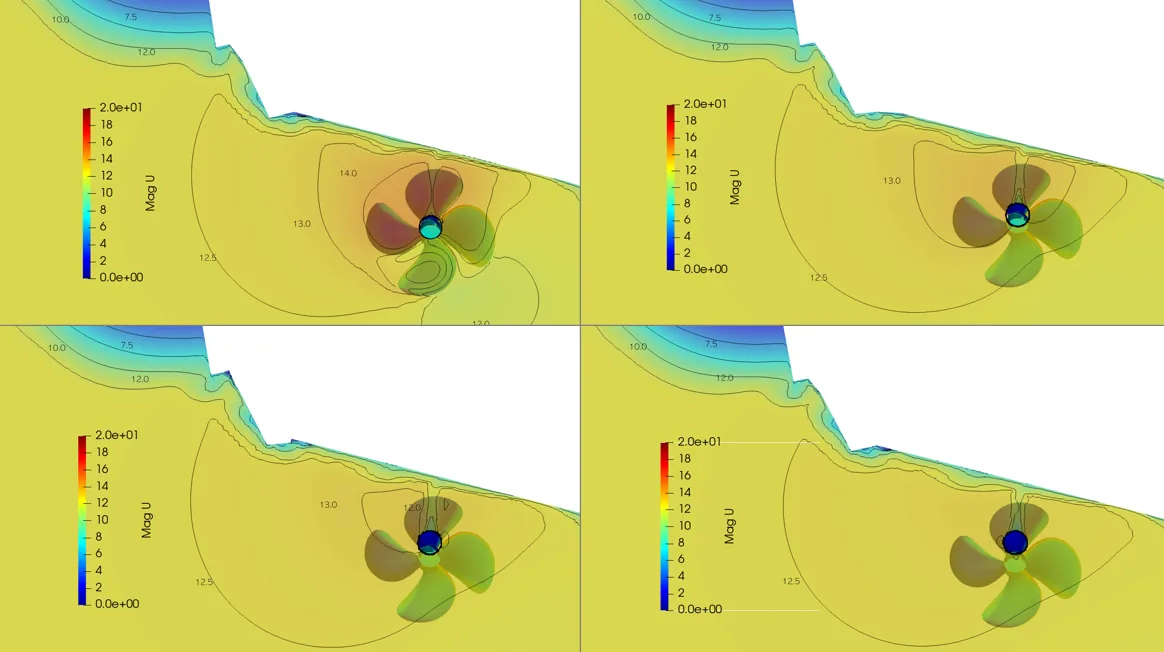
CFD wake-field analysis: velocity field into the propeller behind the hull
Wake-field analysisCFD resolves the flow into the propeller so the design is adapted to the real wake.
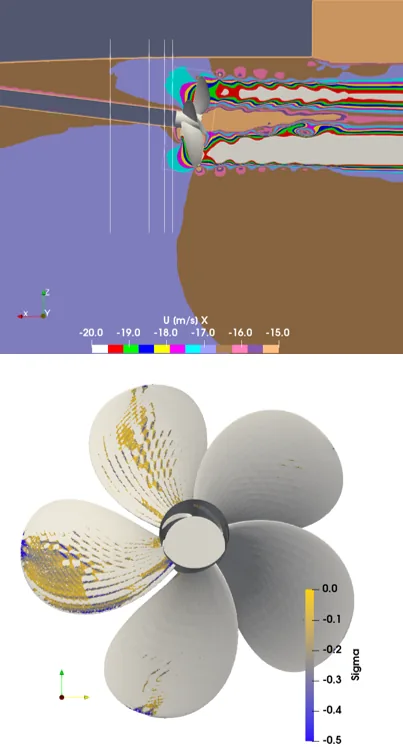
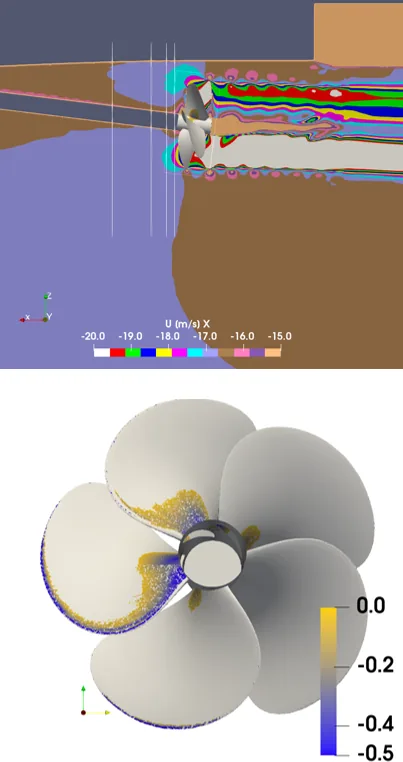
Cavitation - baseline propeller designBaseline
Cavitation - expert-optimised propeller designExpert-
optimised
Cavitation - AI-optimised propeller designAI-
optimised
Cavitation analysisBaseline vs expert-optimised vs AI-optimised, compared side by side.
Early Engagement

Most Propulsion Performance Is Locked In During Early Design.

The Traditional Sequence

Each step locks the next.

  1. 1Fix the hullThrust requirement now locked
  2. 2Select the enginePower output now locked
  3. 3Choose the gearboxRPM now locked
  4. 4Find a propeller to fitOnly diameter, pitch and BAR remain

The propeller has almost zero design freedom - forced to fit a solution into a corner.

Early Co-Design

Every component chosen together.

  1. 1Joint hull-propeller optimisationThe system starts in harmony
  2. 2Match engine to actual needPrecise power, not oversized
  3. 3Gearbox for the sweet spotRatio tuned to the system optimum
  4. 4Propeller optimised to deliverEngineered to hit the performance target

Higher efficiency and lower resistance - because every component was chosen to work together.

The question isn't whether to optimise - it's whether you optimise early enough to matter, or too late to make a difference.

The Value Created

What Intelligent Design Delivers.

Higher propulsive efficiency
Lower fuel consumption
Reduced cavitation & noise
Faster turnaround
Precise vessel-specific fit

Customers now engage Mencast earlier - because engineering expertise creates more value than manufacturing alone.

45years of marine propulsion engineering
200engineers and technicians
10,000+propulsion solutions delivered
1-stopdesigner, manufacturer and repairer in Singapore

A validated digital model is where design ends and manufacturing begins.

Ready to design your next propulsion system with us?